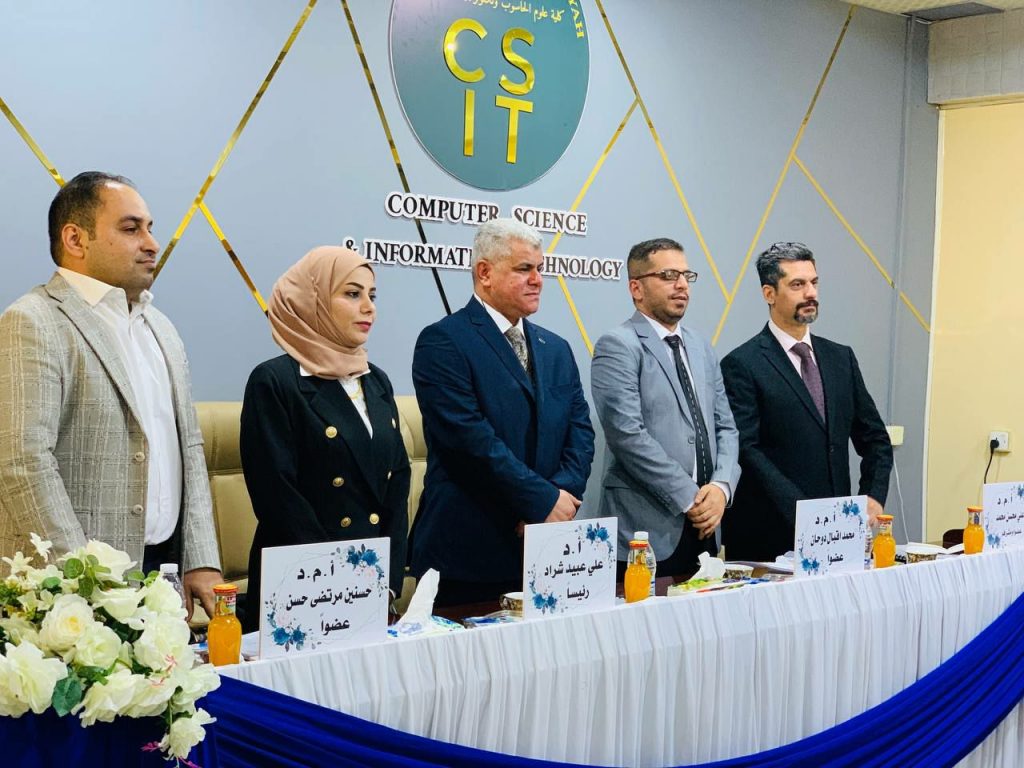
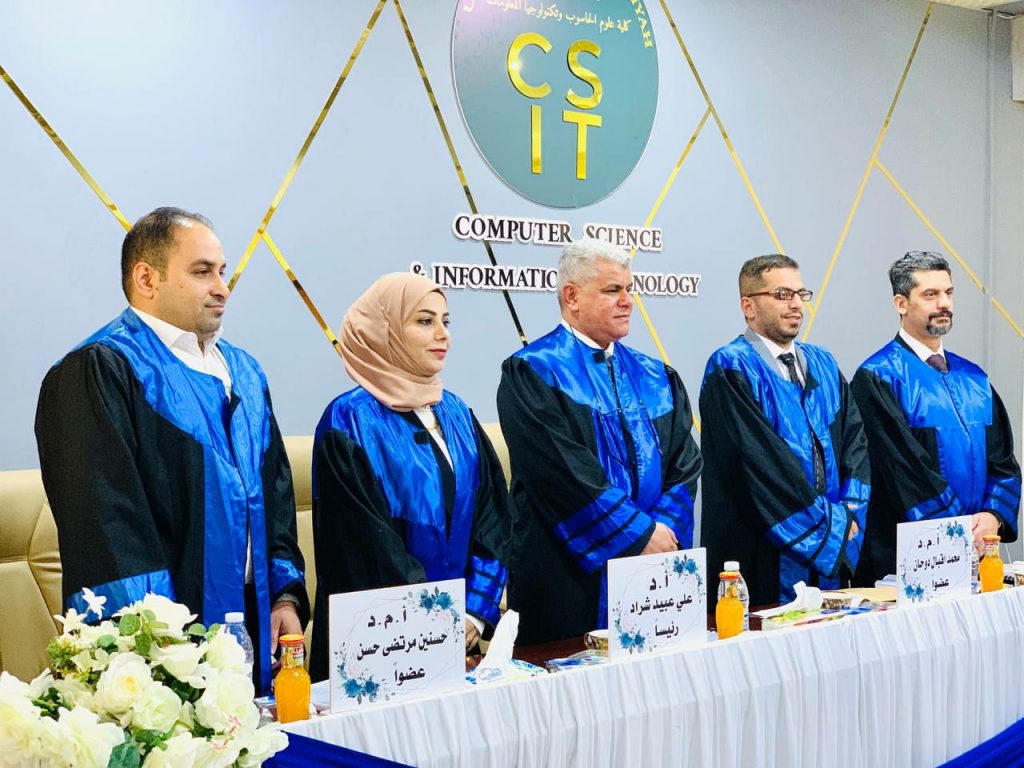
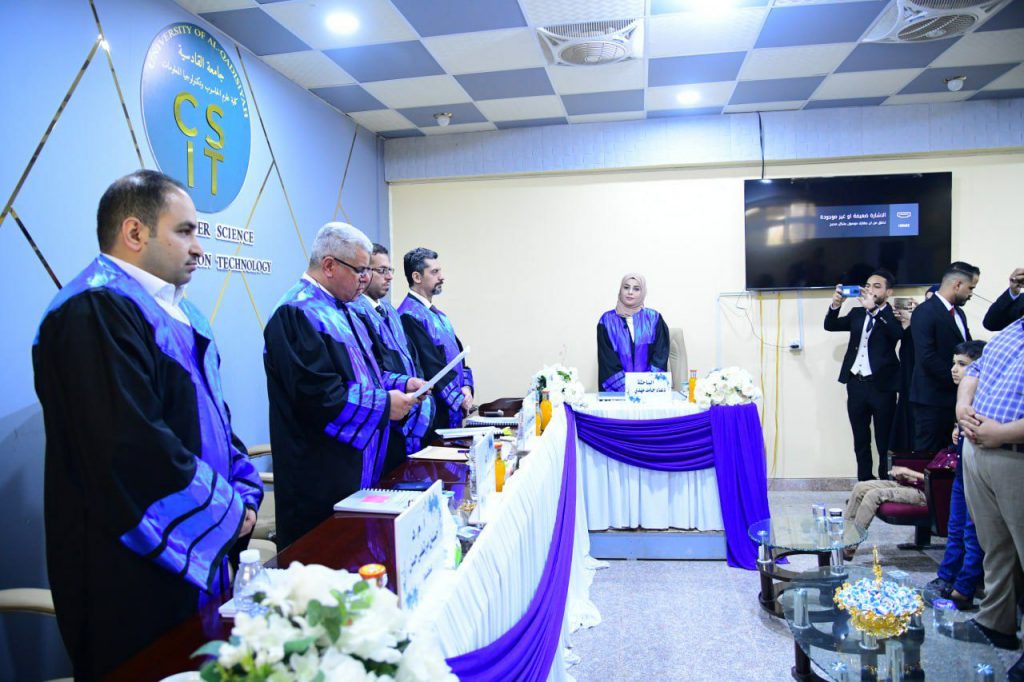
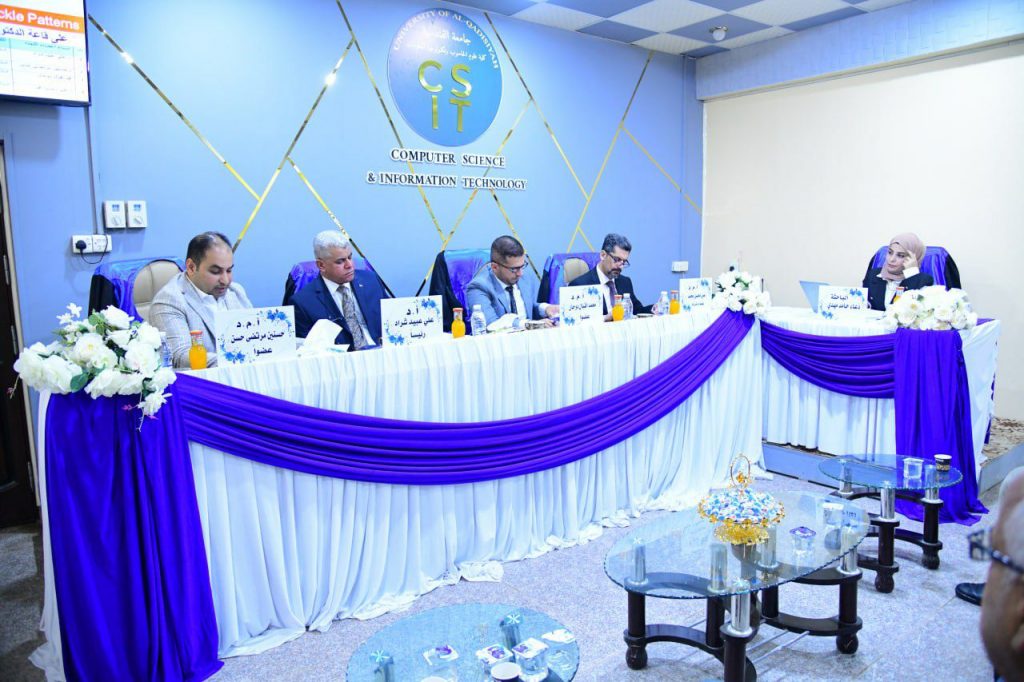
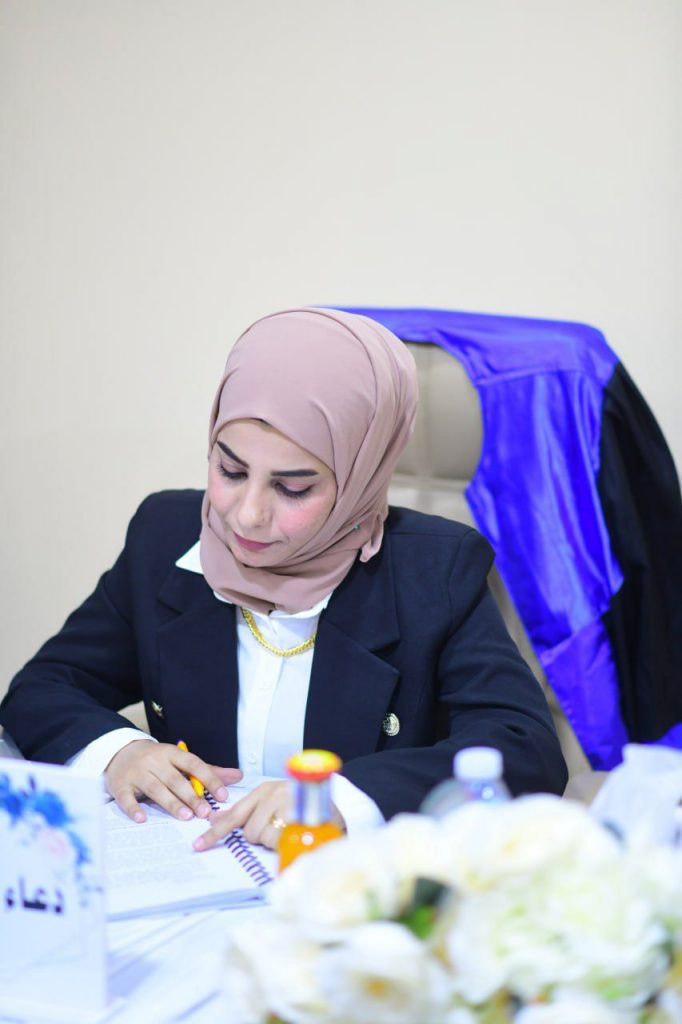
The student, Duaa Hamed Mahdi, presented her thesis to the Council of the Faculty of Computer Science and Information Technology / Department of Computer Science, in the hall of Dr. Mohammad Abbas Al-Jubouri.
This study aimed to identify the finger joint as an emerging biometric technology that has gained significant interest in recent years due to its high accuracy and reliability in identifying individuals. Three-dimensional finger joint is a unique feature that can be used to identify individuals, like fingerprints or facial recognition. Finger joint recognition technology works on wrinkles and curves and uses computer algorithms to create a biological model that can be used for identification purposes.
It is worth noting that this technology is popular because it is inexpensive, easy to use, and can provide a high level of security for personal identification systems in the current technology era, as security is a top priority. Finger joint recognition technology has the ability to become a valuable tool in various industries such as finance, healthcare, and e-government, ensuring accurate and secure identification of individuals.
Therefore, the researcher studied and explained the use of modern artificial intelligence techniques to identify finger joints in her thesis. Based on this, a system was developed that depends on these techniques and tested on a real dataset, such as the image database belonging to the Hong Kong Polytechnic University (HKPU). This dataset is read and processed correctly to make it suitable for the following stages, using the CLAHE filter. The systems developed in this work can be divided into three parts, The first part includes new CNN designs that are trained using different features, such as extracting features from images and classifying them. The models were further developed with increased data to make them more accurate and powerful. In the second part, a new approach is also used to examine its performance on the dataset used. An Autoencoder model was designed and trained on the dataset, and the results obtained for both accuracy and time complexity showed promising performance. Results were obtained from both the second CNN model and Autoencoder that were better than those obtained by other researchers in the 3D/2D hand-drawn image database at the Hong Kong Polytechnic University.
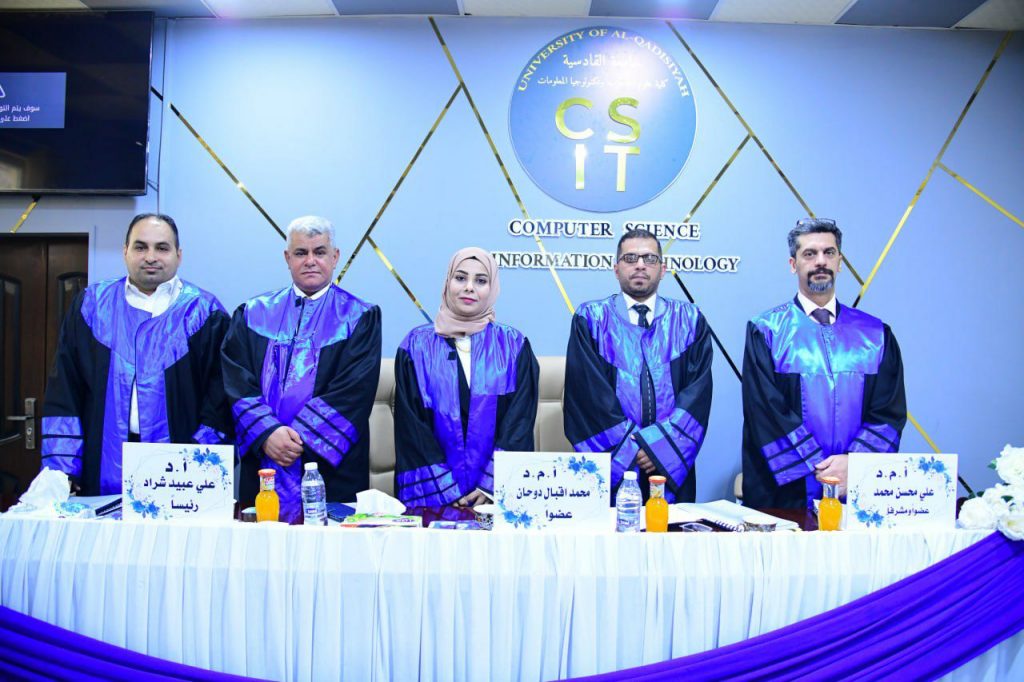
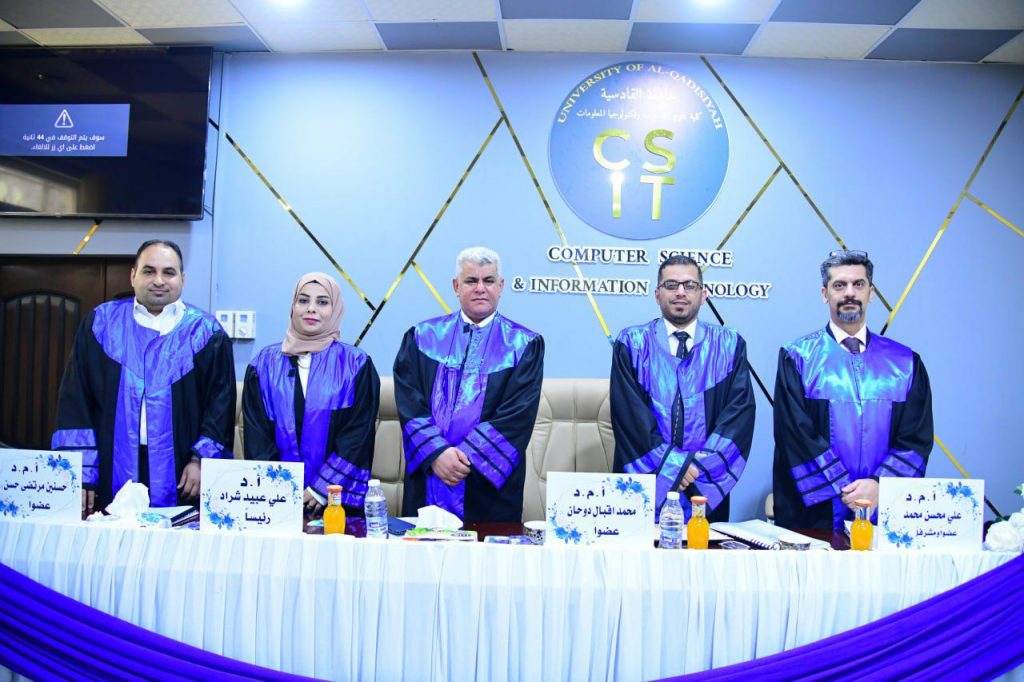
The committee for the defense of the thesis was chaired by Dr. Ali Obaid Sharad from Al-Qadisiyah University, with the membership of:
- Dr. Hussainin Mortadha from Al-Kufa University.
- Mohammed Aqbal Dohan from Al-Qadisiyah University.
- Dr. Ali Mohsen Mohammed from Al-Qadisiyah University as a member and supervisor.
The thesis was accepted with a grade of “very good”.